Cart
0
You may also like


Great. Before I write it let me just do a quick check on what's currently ranking for that query so I can make sure we beat it.Good. What's ranking is all forum threads and US-centric content. No clean, authoritative UK article exists for this query at all. Here we go:
It's the obvious question. You've got a garden full of worms, you've got an axolotl that needs feeding — why not just dig a few up?
The short answer is: technically yes, axolotls can eat garden earthworms. But in the UK specifically, there are real risks that make garden worms a gamble most experienced keepers won't take. This article explains exactly what those risks are, when garden worms might be acceptable, and why farm-raised Dendrobaena worms (Dendrobaena veneta) are the safer choice for your axolotl's long-term health.
The problem isn't the worm itself. Earthworms are nutritionally excellent for axolotls — high protein, soft-bodied, the right size, and close to what they'd eat in the wild. The problem is everything the worm has been living in.
An earthworm is essentially a soil filter. It moves through the ground continuously, ingesting organic matter and absorbing whatever is present in the soil around it. In a typical UK garden, that means the worm may have been exposed to any of the following:
Pesticides and herbicides. The UK gardening market is saturated with chemical products — weed killers, slug pellets, insecticides, lawn treatments. Many of these persist in soil for months or years. A worm living in treated soil will carry traces of those chemicals in its tissues. When your axolotl eats that worm, those chemicals go directly into an animal with permeable skin and a highly sensitive digestive system.
Slug pellets — a specific danger. Metaldehyde and ferric phosphate slug pellets are extremely common in UK gardens. Both are toxic to invertebrates and both accumulate in earthworms that come into contact with them. Ferric phosphate products are often marketed as "wildlife safe" but research suggests earthworms are still affected. If your garden or a neighbouring garden uses slug pellets, worms from that soil are not safe.
Parasites. Wild earthworms can carry nematodes and other parasites that survive in the axolotl's digestive tract. Axolotls have no natural immunity to UK soil parasites — they're native to Mexican lakes, not British gardens. A parasitic infection can be difficult to diagnose and harder to treat.
Heavy metals. Urban and suburban soils in the UK frequently contain elevated levels of lead, cadmium, and zinc from decades of vehicle emissions, old paint, and industrial activity. Earthworms bioaccumulate these metals. In a garden near a road or in an older property, this is a genuine concern.
Unknown feeding history. You have no idea what a garden worm has been eating for the past six months. Rotting organic matter, decomposing animal material, treated compost — all of it passes through the worm and into your axolotl.
There are circumstances where garden worms carry lower risk — but the bar is high.
A garden that is genuinely chemical-free for a minimum of three years, with no pesticide or herbicide use, no slug pellets, no treated compost, away from roads and in a low-pollution area, with no neighbouring gardens using chemicals — in that situation, the risk is meaningfully lower.
Even then, most experienced axolotl keepers won't use garden worms as a staple food. The risk-to-reward ratio simply doesn't stack up when a safe, purpose-raised alternative is readily available and inexpensive.
If you do choose to use garden worms occasionally — rinse them thoroughly in dechlorinated water first, and never use them as a primary food source.
This is the risk that gets least attention but matters most over time.
UK garden soils host a range of nematode species — microscopic roundworms that live inside earthworms as parasites. Some of these are harmless to vertebrates. Others are not. When an axolotl consumes an infected worm, those nematodes can establish themselves in the axolotl's gut, causing chronic low-level infection that shows up as lethargy, weight loss, and loss of appetite over weeks or months — symptoms that are easy to misattribute to water quality or temperature issues.
Farm-raised Dendrobaena worms like ours are raised in controlled substrate without soil contact, which eliminates this risk entirely. They're not exposed to wild soil fauna, they don't carry wild parasites, and their bedding is a clean, inert medium rather than garden earth.
Better — but still not without risk.
An organic garden avoids synthetic pesticides and herbicides, which removes one category of risk. However, organic gardens still use treatments — copper slug deterrents, organic pest sprays, and organic fertilisers that may contain animal waste with its own microbial load. And the parasite risk from wild soil remains regardless of whether the garden is organic or not.
Organic garden worms are a step up from conventionally treated garden worms. They are not equivalent to controlled-environment farm worms.
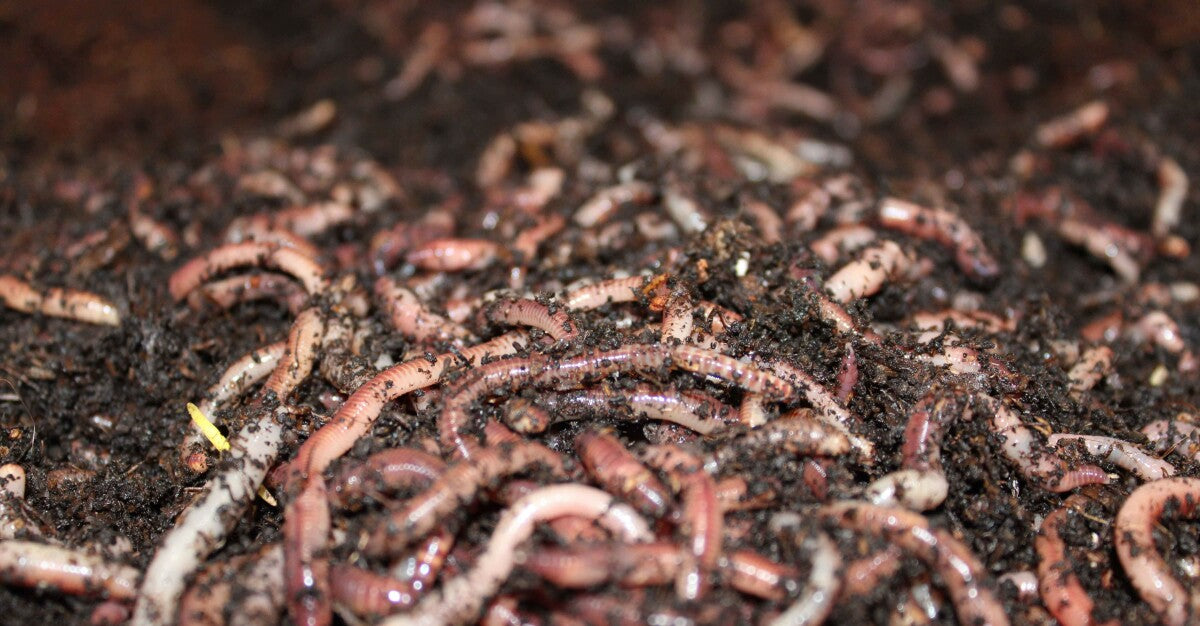
Our Dendrobaena worms (Dendrobaena veneta) are raised here in Huddersfield in a controlled environment from start to finish. They never come into contact with garden soil. Their bedding is a clean, inert medium. They're fed a consistent diet of high-protein worm chow. There are no pesticides, no herbicides, no slug pellet residue, no heavy metal contamination, and no wild soil parasites.
What you get is a worm with a known, clean history — raised specifically to be fed to sensitive aquatic animals. Axolotls have permeable skin that absorbs what's in the water around them, and a digestive system that's not built to process toxins. They deserve food that's been raised with that sensitivity in mind.
The nutritional profile is excellent too — high protein, soft-bodied, aquatic-tolerant (they survive in water far longer than ordinary earthworms without fouling the tank), and the right size for axolotls at every stage of development.
| Garden Worms | Farm-Raised Dendrobaena | |
|---|---|---|
| Pesticide risk | ⚠️ High in most UK gardens | ✅ None |
| Parasite risk | ⚠️ Present in wild soil | ✅ None |
| Heavy metal risk | ⚠️ Common in UK urban/suburban soil | ✅ None |
| Nutritional value | ✅ Good | ✅ Excellent |
| Consistent supply | ❌ Seasonal, weather dependent | ✅ Year-round |
| Safe for axolotls | ⚠️ Only in very specific conditions | ✅ Yes |
Garden worms aren't automatically lethal — but in the UK, where chemical garden treatments are widespread, and soil contamination is common, the risk is real enough that most experienced keepers avoid them as a regular food source. Farm-raised Dendrobaena worms cost very little, last weeks in storage, and carry none of the risks. For an animal that can live 10–15 years with proper care, it's a small investment in peace of mind.
Ready to switch to a safe, reliable worm supply? Our live Dendrobaena worms are raised in Huddersfield and dispatched fresh across the UK, Monday to Friday, with a live arrival guarantee.
Can axolotls eat earthworms from the garden? Technically, yes, but in the UK, most garden soils contain pesticide residues, slug pellet chemicals, and wild parasites that make garden worms a real risk for axolotls. Farm-raised Dendrobaena worms are a much safer alternative.
What worms are safe for axolotls in the UK? Farm-raised Dendrobaena worms (Dendrobaena veneta) are the safest and most nutritionally complete option for UK axolotl owners. They're raised in controlled conditions with no soil contact, pesticides, or wild parasites. Avoid wild-caught garden worms, tiger worms, and lobworms.
Are organic garden worms safe for axolotls? Safer than conventionally treated garden worms, but not risk-free. Organic gardens avoid synthetic pesticides but still use treatments, and wild soil parasites remain a risk regardless. Farm-raised worms are still the safer choice.
How do I know if my garden is safe for collecting worms? The garden would need to be genuinely chemical-free for at least 3 years, away from roads, with no neighbouring gardens using pesticides or slug pellets. In practice, very few UK gardens meet this standard, which is why most axolotl keepers use farm-raised worms instead.
Why are slug pellets dangerous for axolotls? Both metaldehyde and ferric phosphate slug pellets are toxic to earthworms and accumulate in their tissue. When an axolotl eats a worm that has been exposed to slug pellets, those toxins pass directly into an animal with permeable skin and a highly sensitive digestive system.
For a complete guide to feeding your axolotl at every life stage, including how much to feed, how often, and how to store live worms, read our Complete UK Axolotl Feeding Guide.