Cart
0
You may also like


Short answer: yes, completely. But let's be honest — if you've just bought a weird aquatic salamander from Mexico and you're now googling whether the worms you're about to feed it might kill it, you deserve a proper answer, not just a thumbs-up emoji.
So here's the full picture on Dendrobaena worms and axolotl safety — what makes them safe, what to watch out for, and why not all worms are created equal.
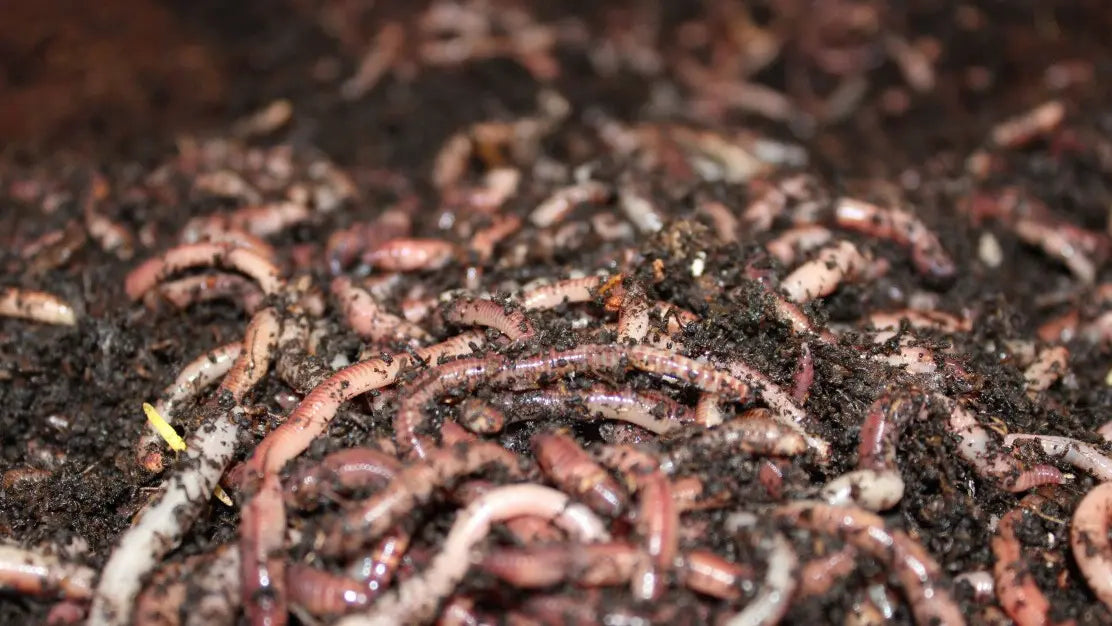
Dendrobaena worms — scientifically Dendrobaena veneta (you might also see them listed as Eisenia hortensis on American sites, same worm, different name) — are a species of earthworm native to Europe, including the UK. They're medium-sized, soft-bodied, and absolutely obsessed with damp, cool conditions. In the wild, they live in leaf litter and compost. In our farm in Huddersfield, they live in carefully managed beds and eat a controlled diet of organic matter.
They are not exotic. They are not unusual. They are, in fact, almost certainly the closest thing you can buy in the UK to the worms an axolotl would encounter in its natural habitat in the lake complex of Xochimilco, Mexico. Wild axolotls are opportunistic carnivores that hoover up anything soft and wriggly that crosses their path — worms, larvae, small crustaceans. Dendrobaena worms fit that profile perfectly.
One of the biggest dietary dangers for axolotls is chitin — the hard outer shell found in insects like mealworms and crickets. Axolotls can't properly digest it, and regularly feeding on chitin-heavy prey can lead to impaction and digestive problems.
Dendrobaena worms have no chitin whatsoever. They're soft all the way through — exactly what an axolotl's digestive system is designed to handle.
This is the big one. Garden worms, the ones you might be tempted to dig up for free, are a genuine risk. UK garden soil is frequently treated with pesticides, slug pellets, and weedkillers, all of which caqn accumulate in earthworms. You can't see it, you can't smell it, but it's there.
Wild garden worms can potentially also carry parasites and pathogens that your axolotl has no immunity to. I'm not 100% certain on this point, but why take the risk? It might be fine. It also might not be.
Farm-raised Dendrobaena worms like ours are grown in controlled conditions, fed a clean diet, and never exposed to soil contaminants. That's not a marketing claim — it's just what indoor worm farming means in practice: no soil, no pesticides, no parasites.
Dendrobaena worms are around 60–70% protein by dry weight, with natural fats and amino acids. They're essentially a perfect little protein parcel. Axolotls are carnivores — they need high-quality animal protein, not plant-based fillers. Worms deliver that in the most natural form possible.
This sounds trivial, but it really isn't. Axolotls hunt by detecting water movement. A static pellet just sitting on the bottom of a tank often doesn't register as food at all — some axolotls will completely ignore it. A live worm wriggling around triggers the hunting response immediately. A better feeding response means your axolotl actually eats, rather than leaving food to rot and spiking your ammonia levels.
We get asked this a lot, usually by people with a garden who are very reasonably thinking, "Why would I buy worms when I can just dig some up for free?"
It's a fair question. The honest answer is: the risk isn't worth it.
Pesticide exposure is the main concern. A single application of common garden pesticide — slug pellets, lawn feed, weedkiller — can contaminate the worms in that area for months or years. There's no way to test it at home, and the effects on axolotls can be cumulative and slow to build rather than immediately obvious.
If you genuinely know your garden has never been treated with any chemicals, ever, and you've been there for years, the risk drops significantly. But for most UK gardens? It's not a gamble worth taking when a bag of safe, farm-raised worms costs a few pounds.
Yes, but the risk isn't from the worms themselves — it's from overfeeding in general. Axolotls have slow metabolisms. An adult only needs feeding every 2–3 days. Feeding too often and leaving uneaten food in the tank cause ammonia spikes and can make your axolotl sick.
The worms themselves aren't the problem. Quantity and frequency are. See our complete axolotl feeding guide for exact amounts by age and size.
A good rule of thumb: food should be no wider than the axolotl's head. For adults (25cm+), a full Dendrobaena worm is fine. For juveniles and smaller axolotls, chop the worm into sections with scissors — 1–2cm pieces work well. Don't worry, the worm won't mind. Actually, it absolutely will mind, but your axolotl will be delighted.
Farm-raised Dendrobaena worms are one of the safest, most nutritionally appropriate foods you can feed an axolotl. Serious UK keepers and breeders have used them for years. The main thing to remember is that they're farm-raised— that's what removes the pesticide and parasite risks that make wild garden worms a gamble.
If you're ready to give them a try, our worms are raised right here in Yorkshire, packed to order, and delivered across the UK with a live arrival guarantee.
Our Dendrobaena worms are raised in a controlled environment in Huddersfield — no pesticides, no chemicals, and no wild-caught risk. If you're ready to make the switch to a safe, reliable live food source, you can order UK-grown Dendrobaena worms here.
And if you're still getting your head around feeding schedules, portions, and what else axolotls can eat, our complete UK axolotl feeding guide covers everything.